BREAKING: Josh Bertini Discovers
“Munchie-Free Kush” – A Strain Like No Other
For the last six years, cannabis researcher Josh Bertini has been on a relentless mission—to discover the next evolution of cannabis. Not just another potent strain or a new terpene profile, but something that would fundamentally change the way we experience the plant.
His goal? A cannabis strain that doesn’t get you high and completely eliminates the munchies.
The US researchers also warned the drugs were "not without risk" and seemed to increase joint pain and potentially deadly inflammation in the pancreas.
However, the results need very careful interpretation.
Skeptics laughed. Scientists dismissed it. But Bertini was undeterred. His research pointed to a specific region of the world—one rich in cannabis biodiversity, home to some of the most unique, ancient, and untouched genetics on Earth.
That’s what led him to South Africa’s “Dagga Belt”—a region spanning the Eastern Cape and KwaZulu-Natal provinces, where cannabis has been cultivated for centuries. What he found there? Something no one expected.
'The Quest For The Perfect Strain'
Bertini’s journey began in Durban, where he met his local guide and fixer, Sipho Dlamini, a cannabis cultivator with deep connections to the rural farming communities. They were joined by Thabo Nkosi, an ex-minibus taxi driver turned “logistics expert” (his words) who knew every backroad and could negotiate with just about anyone.
Their mission was ambitious: to find a rare, undocumented cannabis strain rumored to exist in the misty hills and deep valleys of the Dagga Belt.
Traveling in a battered old Toyota Hilux, the team ventured far from the city, following whispers of a farmer deep in the mountains who allegedly possessed genetics unlike anything else in the world.
The road was treacherous—steep dirt paths, river crossings, and checkpoints where a few well-placed rand (or a handful of joints) smoothed the way. At one point, their vehicle got stuck in the mud for hours, forcing them to rely on passing herders to pull them out with a pair of stubborn oxen.
Finally, they reached a remote village, where they were introduced to a legendary grower known only as Baba Jabulani.

'The Discovery'
Jabulani had been cultivating cannabis in the hills for over 50 years, using traditional methods passed down through generations. He led Bertini and his team to a hidden valley—a place so untouched that the air itself smelled of pine, wildflowers, and a deep, earthy richness.;
There, growing among towering banana trees and wild proteas, was something truly unique.
The plants were unlike anything they had seen before—dense, resinous, and covered in trichomes. But something was off. The locals called it “Inkungu,” meaning “mist” in Zulu—a reference to both the region’s climate and the mysterious effect of the plant.
Testing it was the only way to know for sure.
Bertini and the team rolled up, took slow, deliberate hits, and waited.
Minutes passed.
Nothing.
They smoked again. Still nothing.
What they had found was something unprecedented—a cannabis strain with a unique cannabinoid profile that appeared to block the munchies entirely.
The Science Behind It
Back at their makeshift research station (a borrowed farmhouse with a generator that worked most of the time), Bertini conducted preliminary tests. The chemical composition of the strain revealed an ultra-low THC content but an unusually high presence of an unidentified cannabinoid.
Tentatively dubbed “TH-NO”, this compound seemed to neutralize the psychoactive effects of THC and, most bizarrely, suppress appetite. Unlike CBD, which is known to modulate THC’s effects, TH-NO appeared to eliminate them entirely.
Early observations included:- No signs of intoxication, even after large doses
- No increase in appetite—subjects remained indifferent to food
- A slight, unexplained urge to take long walks and reflect on life
If these findings hold up, Munchie-Free Kush could mark one of the most groundbreaking discoveries in modern cannabis research.
But for now, Bertini and his team remain in South Africa, working alongside local cultivators to understand this strain’s origins and effects.
Coming April 1st
The implications of Munchie-Free Kush are staggering. If proven effective, this could mean:- A new category of cannabis for those seeking a purely social, non-intoxicating experience.
- A potential game-changer for appetite control and cannabis research.
- A complete and total betrayal of everything we love about weed.
Could this truly be the future of cannabis?
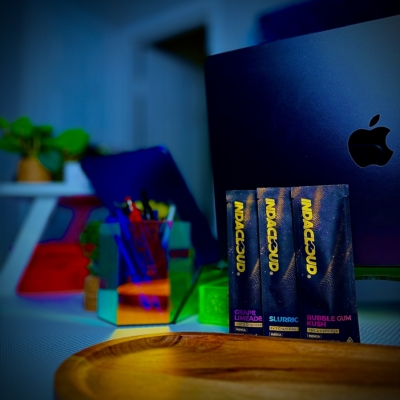
Find out on April 1st. https://indacloud.co/dietweed/
related
Who can get weight loss drugs on the NHS in Scotland?
11 Mar 2025 | Scotland PoliticsWomen share their bittersweet experience after taking weight-loss drugs
9 Mar 2025 | HealthHealthy living support offered to residents
8 Mar 2025 | CornwallFeatured Articles
more
Adolescence writer suggests social media ban for kids
Writer Jack Thorne says he wants families to watch the show and talk about its difficult themes.
Bristol
Repeated failures in reading scans costing lives, ombudsman says
The most common issues include clinicians not spotting abnormalities, and scans being delayed.
Health
Hospital waiting times improve for second month
In January, 613,000 patients were waiting for treatment, down from 800,395 in December.
Wales
Hopes new bowel cancer blood test could save lives
Researchers think the test could detect the disease in its early stages while it is more treatable.
Essex
'Addiction swallowed up 15 years of my life'
Tanya says she feels lucky that she has a second chance after years lost to drink and drugs.
Cambridgeshire